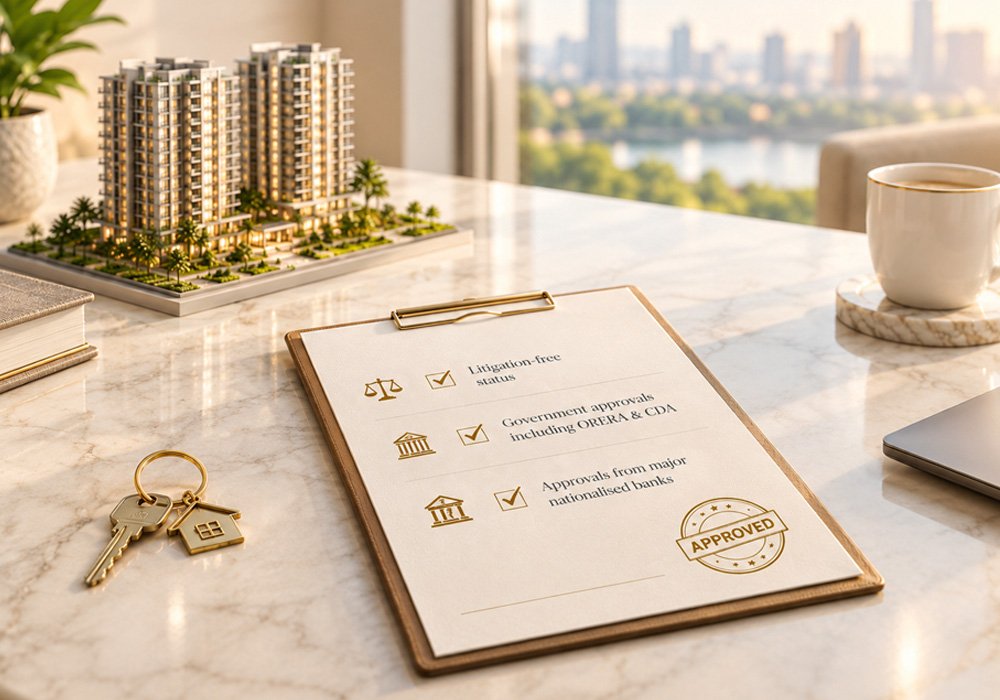
Buying a home is more than choosing a location, comparing floor plans or imagining life in a new neighbourhood. It is a significant financial commitment, often built on years of savings. Yet, a property that looks perfect on paper may carry legal complications that remain hidden until much later.
For anyone exploring new residential projects in Odisha’s Cuttack, the smartest first step is to look beyond the sales pitch. Verify the property’s legal status, government approvals and banking credentials before committing your money. A few careful checks today can help prevent costly complications tomorrow.
Verify that the Property is Litigation-Free
A beautiful home loses its appeal if its ownership is contested. Disputes involving inheritance, unclear ownership, multiple claims or outstanding mortgages can complicate a purchase and affect possession or resale.
As part of property legal verification, ask an independent property lawyer to examine the title deeds and ownership history. Check the Record of Rights (RoR), relevant mutation records and the Encumbrance Certificate (EC). These documents help establish ownership and identify recorded transactions or liabilities, although no single document guarantees that a property is entirely dispute-free.
Your lawyer should also investigate pending litigation, existing mortgages, acquisition notices and restrictions affecting the land. If a previous loan was secured against the property, verify that it has been cleared and obtain the necessary release documents.
The goal is to establish that the seller has the legal right to transfer the property and that no unresolved claim threatens your ownership.
Check ORERA Registration
The Real Estate (Regulation and Development) Act, 2016, established a framework for greater transparency and accountability in real estate. In Odisha, the regulatory authority is the Odisha Real Estate Regulatory Authority (ORERA). Projects meeting the applicable criteria must be registered before being marketed or sold, subject to statutory exemptions.
When evaluating ORERA-approved projects, visit the official ORERA website and search for the project using its name, promoter or registration number. Do not rely exclusively on a brochure or a salesperson’s assurance.
Check whether the registration details match the property, whether the relevant phase is covered, and what the declared completion timeline and project status indicate. Review available disclosures about land, approvals and the promoter.
ORERA registration is an important safeguard, but it does not eliminate the need to examine ownership documents, sanctioned plans and contractual terms independently.
Confirm CDA and Government Approvals
For buyers considering CDA-approved properties, checking the relevant planning and building permissions is essential. The Cuttack Development Authority (CDA) oversees planning and development within its jurisdiction, while other competent authorities may handle properties outside its remit.
Ask the developer for the sanctioned building plan, layout approval and other applicable permissions. Depending on the project, additional clearances may include fire-safety and environmental approvals. For completed properties, check the applicable Completion Certificate and Occupancy Certificate.
Verify these documents with the relevant authority rather than accepting photocopies at face value. The Cuttack Municipal Corporation’s online services also provide access to building-permission services.
Remember that a plotted development, apartment complex and resale home may require different documents. Always verify approvals for the specific property you intend to purchase.
Check Approvals from Major Nationalised Banks
Bank-approved residential projects offer another useful checkpoint. Banks may examine a project’s title documents, sanctioned plans and other relevant paperwork before accepting it for home-loan processing.
Ask whether the project has been approved by trusted and reliable financial institutions. Then confirm the approval directly with the respective bank.
However, bank approval is not an absolute guarantee of legal safety, construction quality or future returns. It also does not guarantee that your individual loan application will be accepted. Treat bank approval as an additional layer of scrutiny, not a substitute for independent legal advice.
Follow a Homebuying Checklist
Before paying a booking amount or signing an agreement, review these essentials:
- Ownership: Title deeds, ownership history, RoR and mutation records.
- Liabilities: Encumbrances, mortgages, pending disputes and outstanding dues.
- Approvals: Applicable ORERA registration, sanctioned plans and local-authority permissions.
- Completion: Relevant completion and occupancy certificates.
- Financial terms: Total price, payment schedule, additional charges and cancellation conditions.
- Agreement: Carpet area, possession date, promised specifications, delay clauses and refund terms.
Have a property lawyer review the agreement before signing. Under RERA, a promoter cannot accept more than 10% of the property’s cost as an advance or application fee without first entering into a written agreement for sale and registering it as required by law.
Make Confidence Part of Your Investment
The right home should offer more than attractive architecture or a promising location. It should have documents that stand up to scrutiny and approvals that can be independently verified.
Whether you are comparing RERA-approved residential projects in Cuttack or evaluating a property for long-term investment, examine its legal standing, government permissions and bank-approval status. A thorough homebuying checklist takes time, but it helps you make an informed decision and protect one of your most important investments.